India's biggest Nuclear push since 1962

Nuclear Energy Sector in India

(PM Modi, Trump’s Big Nuclear Push to Get More Atomic Reactors to India, 2025)

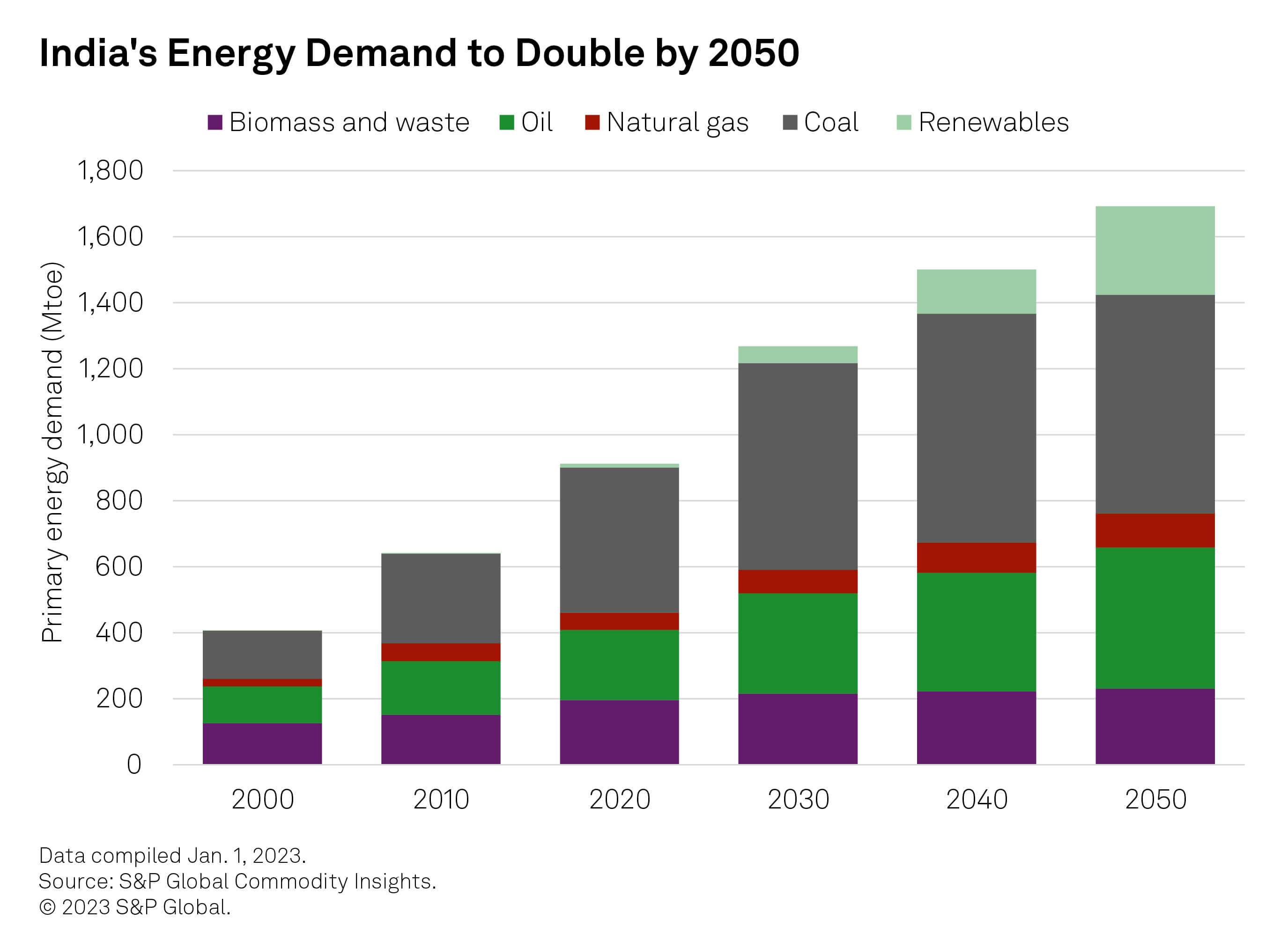
With the signing of the SHANTI Bill, 2025 India enters its biggest nuclear energy expansion since the Atomic Energy Act of 1962. With a growing and urbanizing population and a surge in data centres, India’s power demand is estimated to grow 5-7% annually to 1,700 Mtoe (2,250 GW) by 2050 and nuclear might just be India’s knight in shining armour. By mobilizing ₹15-20 lakh crore private capital, deploying Small Modular Reactors to replace coal use and help industries bypass carbon taxes and securing nuclear energy as clean baseload power to stabilise the grid against renewable fluctuations, SHANTI aims to scale nuclear capacity to 100GW by 2047.

1. Nuclear vs other renewable sources

LCOE, or Levelized Cost of Energy, is a metric that calculates the average total cost of building and operating an energy system (like a solar farm or power plant) over its lifetime, divided by the total energy produced. While dispatchability implies the ability to “switch on or off” the energy source as market demands. Let’s breakdown how nuclear energy compares to other renewable sources.

TechnologyTypical LCOE (USD/MWh)DispatchabilityNotes
Nuclear~69 (median)BaseloadMore reliable 24/7 generation
Solar PV~28–117VariableCheapest on LCOE basis
Onshore Wind~23–139VariableOften lowest cost on LCOE
Renewables + Batteryincreases LCOE when firming includedFirmableStill generally competitive if storage costs fall

Nuclear is far more dispatchable than solar or wind–it churns out energy when the wind’s not blowing or when the sun’s not shining. Variable renewables like solar and wind are often cheaper per unit when generating, but because output depends on weather and time of day, achieving the same reliability typically requires overbuilding capacity plus storage, transmission upgrades, or firming resources, which raises total system cost. Nuclear becomes even more compelling when when looked at by raw material efficiency – for the same 10,000 TWh/year, nuclear typically requires multiple times less total material than wind and an order of magnitude less than solar.

Total tonnage required to build 10000 Twh generation capacity

2. Energy Market in India

In FY 2024–25, India’s total electricity consumption reached around 1,694 TWh (terawatt-hours) — about 33 % higher than in FY 2020–21 and is projected to grow 5-7% annually. Primary energy includes all fossil fuels (coal, oil, gas), biomass, nuclear and renewables combined — with coal still a dominant source despite rapid growth in clean energy capacity.
3. India’s Nuclear Landscape today

India currently operates 22 commercial nuclear reactors across multiple sites today with 5 more under-construction and 5 more planned. India’s current combined installed capacity is ~8.8 GW contributing to roughly 3% of India’s total electricity generation and as of FY 2024-25 nuclear generation was around 56.7 TWh.

Operational Nuclear Plants in India

Power PlantLocation (State)OperatorApprox. Capacity (MW)
Tarapur Atomic Power Station (TAPS)MaharashtraNPCIL~1,400
Rajasthan Atomic Power Station (RAPS)RajasthanNPCIL~1,180
Kakrapar Atomic Power StationGujaratNPCIL~440
Kaiga Atomic Power StationKarnatakaNPCIL~880
Kudankulam Nuclear Power PlantTamil NaduNPCIL~2,000
Madras (MAPS)Tamil NaduNPCIL~440
Narora Atomic Power StationUttar PradeshNPCIL~440

Under construction nuclear plants in india

Plant / UnitsLocationOperatorNotes
Kudankulam Units 3 & 4Tamil NaduNPCILVVER-1000 units (~2,000 MW) 
Kakrapar Units 3 & 4GujaratNPCILAround 1,400 MW 
Rajasthan Units 7 & 8RajasthanNPCIL~1,400 MW 
Madras (Kalpakkam) PFBRTamil NaduBHAVINIPrototype Fast Breeder, ~500 MW

Following the 2008 Indo–U.S. civil nuclear deal and related understandings with the Nuclear Suppliers Group (NSG), India gained access to international nuclear fuel and technology despite not being a signatory to the Nuclear Non-Proliferation Treaty (NPT). In parallel, the government is pursuing small modular reactors (SMRs) and domestically developed advanced heavy water reactors (AHWRs) to enhance energy security. Still, expansion is constrained by high costs, safety concerns, and long project lead times.


4. SHANTI Bill, 2025

The SHANTI Bill is a major change to India’s nuclear rules. It replaces the Atomic Energy Act (1962) and the Civil Liability for Nuclear Damage Act (2010) and creates one new system to regulate and open up nuclear energy.

features of the bill

  • Section 3(1): Expands eligibility by allowing private companies and joint ventures (not just government entities) to apply for nuclear project licences, enabling participation in construction, operation, and fuel fabrication.

  • Section 3(5): Keeps sensitive fuel-cycle activities strictly under Central Government control, including enrichment, isotopic separation, spent fuel management, and high-level waste reprocessing.

  • Licensing + Safety Structure: Creates a two-step approval system—a Central Government licence to undertake nuclear activities, and a separate AERB safety authorisation for radiation-related activities, strengthening oversight and safety compliance.

  • Section 9(1): Liberalises peaceful nuclear R&D, allowing research without prior licensing (except reserved areas), supporting domestic innovation and emerging needs like AI, high-performance computing, and 24/7 clean power.

  • Section 17: Gives the AERB statutory independence, including financial autonomy, and adds dispute-resolution mechanisms such as an Atomic Energy Redressal Advisory Council, appellate oversight, and a Nuclear Damage Claims Commission for compensation handling.

  • Liability & Compensation (Sections 11 and 16): Maintains no-fault liability with strict operator responsibility, but introduces reactor-size-based liability caps, requires mandatory insurance, limits supplier liability to contract terms or wilful misconduct, and aligns India with the IAEA Convention on Supplementary Compensation.

In Conclusion

India’s nuclear sector is entering a new growth phase as electricity demand rises and the need for firm, low-carbon power becomes more urgent. While renewables will drive most new capacity, nuclear stands out for providing reliable 24/7 generation that strengthens grid stability. The SHANTI Bill supports this shift by modernizing governance, expanding eligibility for private participation, and improving regulatory and liability clarity. At the same time, strategic fuel-cycle activities remain under central government control to protect national security interests. The success of this expansion will depend on reducing costs, shortening timelines, and maintaining strong safety oversight.

sources

India’s World, “The SHANTI Bill: India’s Nuclear Policy Reset,India’s World, accessed January 19, 2026, https://indiasworld.in/the-shanti-bill-indias-nuclear-policy-reset/.

BYJU’S, “Nuclear Power Plants in India List,BYJU’S, accessed January 19, 2026, https://byjus.com/govt-exams/nuclear-power-plants-india-list/.

S&P Global, “India’s Energy Transition: More Energy, Fewer Emissions,S&P Global, accessed January 19, 2026, https://www.spglobal.com/en/research-insights/special-reports/look-forward/india-s-energy-transition-more-energy-fewer-emissions.

S&P Global, “India’s Energy Transition: More Energy, Fewer Emissions,S&P Global, accessed January 19, 2026, https://www.spglobal.com/en/research-insights/special-reports/look-forward/india-s-energy-transition-more-energy-fewer-emissions.

Solar Tech Online, “Cost of Renewable Energy Guide,Solar Tech Online, accessed January 19, 2026, https://solartechonline.com/blog/cost-of-renewable-energy-guide/.

Moses Jeremiah Barasa Kabeyi and Oludolapo Akanni Olanrewaju, “The Levelized Cost of Energy and Modifications for Use in Electricity Generation Planning,” Energy Reports 9, Supplement 9 (2023), accessed January 19, 2026, https://www.sciencedirect.com/science/article/pii/S2352484723010569.

Nuclear Power Corporation of India Limited (NPCIL), “All Plants,NPCIL, accessed January 19, 2026, https://www.npcil.nic.in/content/302_1_AllPlants.aspx.

Nuclear Power Corporation of India Limited (NPCIL), “All Plants,NPCIL, accessed January 19, 2026, https://www.npcil.nic.in/content/302_1_AllPlants.aspx.

S&P Global, “India’s Energy Transition: More Energy, Fewer Emissions,S&P Global, accessed January 19, 2026, https://www.spglobal.com/en/research-insights/special-reports/look-forward/india-s-energy-transition-more-energy-fewer-emissions.

S&P Global, “India’s Energy Transition: More Energy, Fewer Emissions,S&P Global, accessed January 19, 2026, https://www.spglobal.com/en/research-insights/special-reports/look-forward/india-s-energy-transition-more-energy-fewer-emissions.

Harsh Shah, Analyst.